Queensland has some of the strictest pool safety requirements in Australia, and for good reason. With more backyard pools per capita than almost anywhere else in the country, the state takes drowning prevention seriously. If you own or are planning a pool in Brisbane, understanding these pool safety laws in Queensland isn’t optional. It’s a legal responsibility that protects the people you care about most.
The 300mm Rule: Which Pools Are Regulated
Under Queensland law, any structure capable of holding water to a depth of 300mm or more is classified as a regulated pool. This covers permanent concrete pools, above-ground pools, spas and even some larger portable pools. It doesn’t matter whether the pool is brand new or decades old. If it holds 300mm of water, the pool safety standard applies.
This is managed through the Building Act 1975 and overseen by the Queensland Building and Construction Commission, commonly known as the QBCC. The technical requirements sit within the Queensland Development Code, Mandatory Part 3.4, which sets out exactly how a compliant barrier should be built.
Barrier Height and Non-Climbable Zones
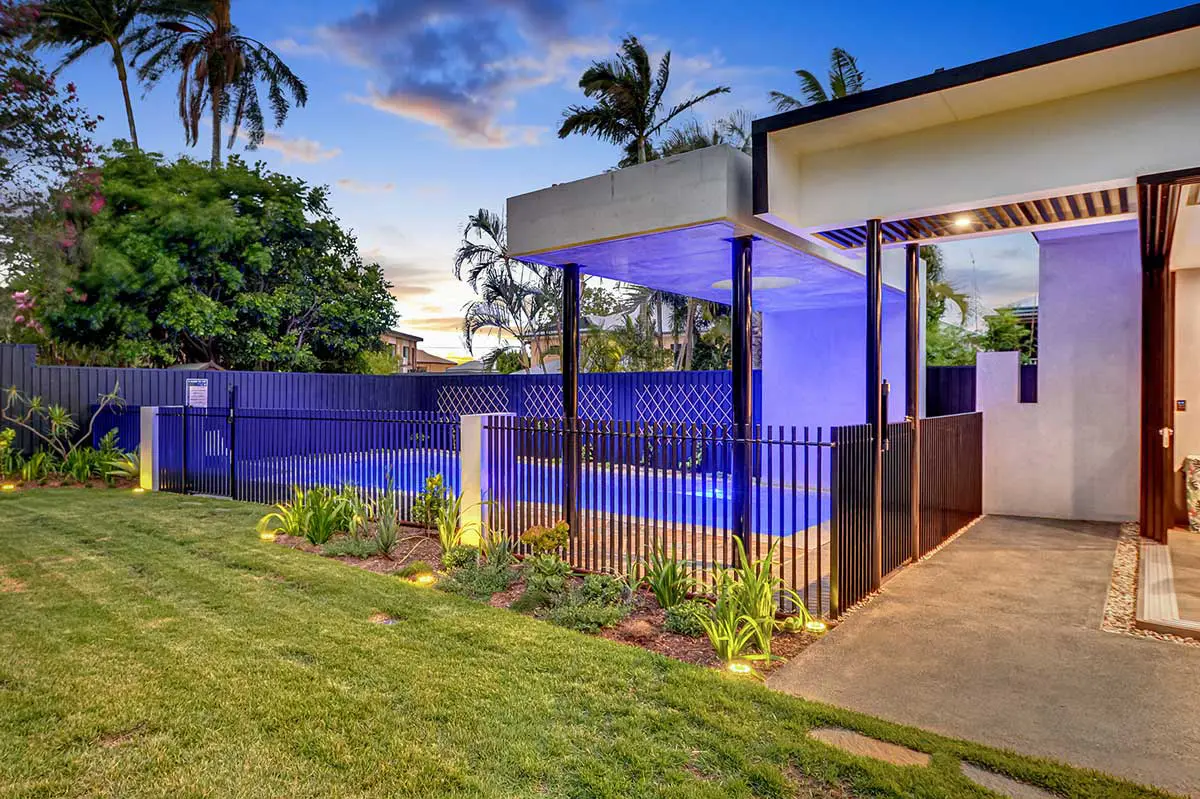
The core of Queensland’s pool safety standard is the physical barrier separating your pool from the rest of the property. At minimum, pool fencing must stand at least 1,200mm high at every point along its length, measured from the ground or any standing surface nearby.
Gaps matter just as much as height. Vertical gaps in the fence can’t exceed 100mm, and there needs to be a clearance of at least 900mm below the bottom rail so a small child can’t squeeze underneath. Horizontal rails create their own risk, since they can act as a ladder, so any rail spacing needs to meet the non-climbable zone requirements set by the QBCC.
Climbable objects, including pot plants, outdoor furniture, barbecues and even tree branches, need to be kept clear of the barrier on both sides. A beautifully designed pool area can quickly become non-compliant if a garden bed or bench seat ends up too close to the fence line.
Gates, Latches and Doors
Self-closing, self-latching gates are mandatory, and they must open away from the pool area. The latch release needs to sit at least 1,500mm above ground level, well out of reach of small children. If your home uses a door leading directly from the house into the pool area as part of the barrier, that door also needs to comply, and a lockable cover alone is never enough on its own to satisfy the standard.
This is a common misunderstanding we come across with clients considering a pool spa combination or a pool built close to the home. A gate or door that looks secure isn’t necessarily compliant unless it meets the specific latch height, self-closing action and swing direction rules.
CPR Signage Is Not Optional
Every regulated pool in Queensland must display a CPR sign, positioned so it’s clearly visible to anyone in the pool area. The sign needs to show emergency steps, including calling triple zero and providing first aid, and it must remain legible over time. Faded or damaged signage is one of the more common compliance failures picked up during inspections.
Registration and Pool Safety Certificates
Every private pool and spa in Queensland must be registered with the QBCC. You can check your property’s status through the Pool Safety Register, and registering an unlisted pool takes only a few minutes online.
While you don’t need an annual inspection simply to keep living in your home, a valid pool safety certificate is required whenever you sell or lease a property with a pool. Landlords must provide tenants with a current certificate before a lease begins or renews. Local councils, including Brisbane City Council, also conduct random inspections and can issue on-the-spot fines for non-compliant barriers, so it pays not to wait until a sale is on the table.
Who Is Responsible for Compliance
The pool owner carries the ongoing legal responsibility for keeping the barrier compliant and in good repair, even if a tenant is living in the property. Tenants, in turn, are responsible for not placing climbable objects near the fence. Where a pool is shared and managed by a body corporate, responsibility generally sits with the corporate body rather than an individual owner.
Building It Right From the Start
The easiest way to avoid compliance headaches down the track is to get the barrier design right during the design process, before construction even begins. Our team factors pool safety requirements into every project from the earliest concept stage, whether we’re building a family pool, a luxury pool or a pool on a tricky, sloping block. Getting it right early means fewer surprises at final inspection and genuine peace of mind once your family starts using the pool.
If you’d like to see how thoughtful design and safety compliance work together in practice, our pool portfolio showcases completed Brisbane projects built to current standards.
Final Thoughts
Queensland’s pool safety laws exist for one reason: to prevent tragedies. They can feel like a lot to keep track of, particularly around barrier height, non-climbable zones and gate hardware, but they’re manageable once you understand the fundamentals. Whether you’re building a new pool, buying a property with an existing one, or simply making sure your current setup is up to scratch, it’s worth having a licensed pool safety inspector check your barrier against the current standard.
If you’re planning a new pool in Brisbane and want a build that’s compliant from day one, get in touch with our team. We’ll walk you through exactly what your site needs, and help you create a pool you can enjoy with complete confidence in its safety.