If you’re building a pool in Brisbane or upgrading an existing one, pool fencing is one of those things you can’t skip. It’s not just about ticking compliance boxes, it’s about keeping your family safe whilst creating an outdoor space you’ll actually want to spend time in. Queensland’s pool safety laws are amongst Australia’s strictest for good reason, but that doesn’t mean your fencing has to look like a prison yard.
The good news is you’ve got options. Glass, aluminium, timber, each brings something different to the table in terms of look, maintenance, and cost. The key is understanding what Queensland requires, then choosing materials and designs that work with your pool design rather than against it. Whether you’re installing a new concrete pool or getting an existing one ready for sale, this guide covers everything Brisbane homeowners need to know about pool fencing that actually works.

What Queensland Law Actually Requires
Let’s start with the non-negotiables. Queensland’s pool safety laws exist because childhood drowning statistics forced legislators to take action. The Queensland Building and Construction Commission (QBCC) oversees compliance, local councils enforce it, and penalties for getting it wrong aren’t trivial.
Here’s what counts as a regulated pool: anything that can be filled with water to 300mm depth or more and is used for swimming, wading, or paddling. That includes traditional concrete pools, above-ground pools, spa combinations, and even some inflatable pools. The only things exempt are portable wading pools under 2,000 litres that can’t be filled beyond 300mm and have no filtration system.
All regulated pools must be registered on the QBCC Pool Safety Register. The register tracks every pool in Queensland, along with safety certificates and compliance history. Registration is free but mandatory, and failing to register can cost you. Penalties for unregistered pools or spas: an on-the-spot fine of $287.50 or a maximum court penalty of $2,875 may apply.
The Height and Gap Rules Everyone Needs to Know
Your pool fencing must be at least 1200mm (1.2 metres) high, measured from ground level to the top of the barrier. This measurement gets taken at a right angle to the ground surface directly under the fence, which matters quite a bit if your Brisbane property sits on a slope. Many homes around here have elevation changes, so you can’t just assume 1.2 metres at one point means compliance everywhere.
The gap between your fence bottom and the ground can’t exceed 100mm. Same goes for gaps between vertical pickets, glass panels, or any other fence elements. These measurements apply to every single section of your fence perimeter, including where different fence types meet or where your barrier connects to buildings.
Non-climbable zones are where things get interesting. Your fence needs at least one gap of 900mm or more between horizontal rails on the outside face. This 900mm zone, measured from the top of one rail to the rail below, creates a section too big for kids to use as a climbing ladder. Within this zone, vertical elements like posts or slats can be up to 100mm apart.

https://www.qbcc.qld.gov.au/home-owner-hub/swimming-pools/pool-safety-standard/non-climbable-zones
For boundary fences that double as pool fencing and stand at least 1800mm high, regulations let you put the non-climbable zone on the inside face instead. But you’ve got to make sure nothing exists underneath that a child could step on, which would reduce the effective fence height below that minimum 1800mm requirement.
Gates Are Where Most Problems Happen
Pool gates represent the weakest link in any pool fencing system because they’re designed to open. Queensland regulations get pretty strict here, recognising that a gate left open eliminates whatever protection your entire fence provides.
Every pool gate must be self-closing and self-latching from all positions. That means when you open the gate and let go, it has to automatically swing closed and latch itself without you touching it. Gates must open outward away from the pool, never inward. This ensures that if a child reaches the gate, pushing against it won’t give them access.
Latches must sit at least 1500mm above ground level. If your gate design puts the latch lower, it needs to be on the inside of the gate, requiring someone to reach over or through the fence. Inside latches must be at least 150mm below the top of the gate or any hand holes. They must also be covered with a 450mm-radius shield to minimise children putting their finger through gaps to open the gate.
This is where soft-close hinges make a real difference. These hydraulic systems ensure gates close gently and consistently every time, dramatically reducing the risk of accidentally leaving gates open. They also cut down on wear and tear, reduce noise, and adjust for things like wind or alignment changes over time. When working with experienced pool builders, soft-close hinges often come as standard because they just work better than spring-loaded alternatives.
Glass Pool Fencing: The Visibility Winner
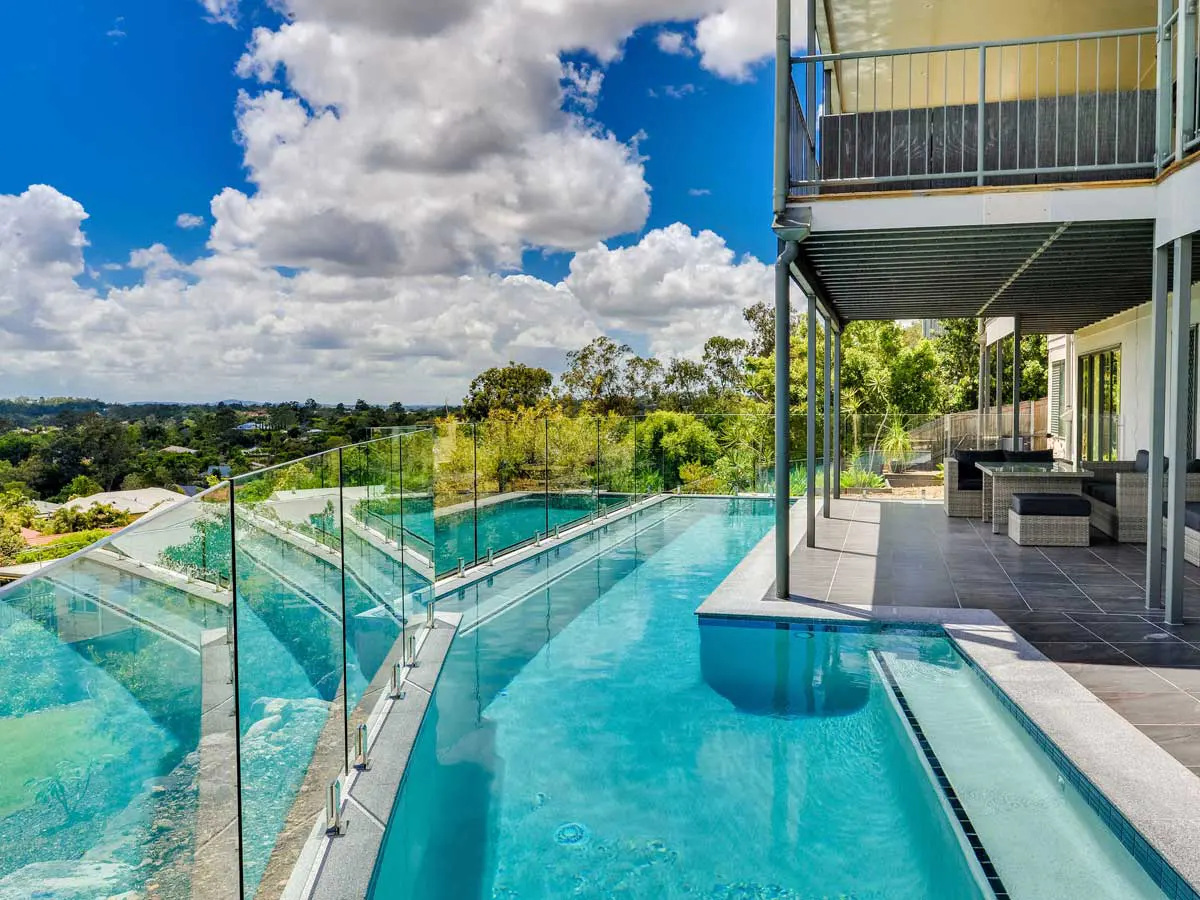
Glass pool fencing has taken over Brisbane for good reason. The transparency creates unobstructed sightlines to your pool area, which is brilliant for both aesthetics and safety. You can monitor kids swimming from anywhere in the backyard, and the visual openness makes outdoor spaces feel way more expansive.
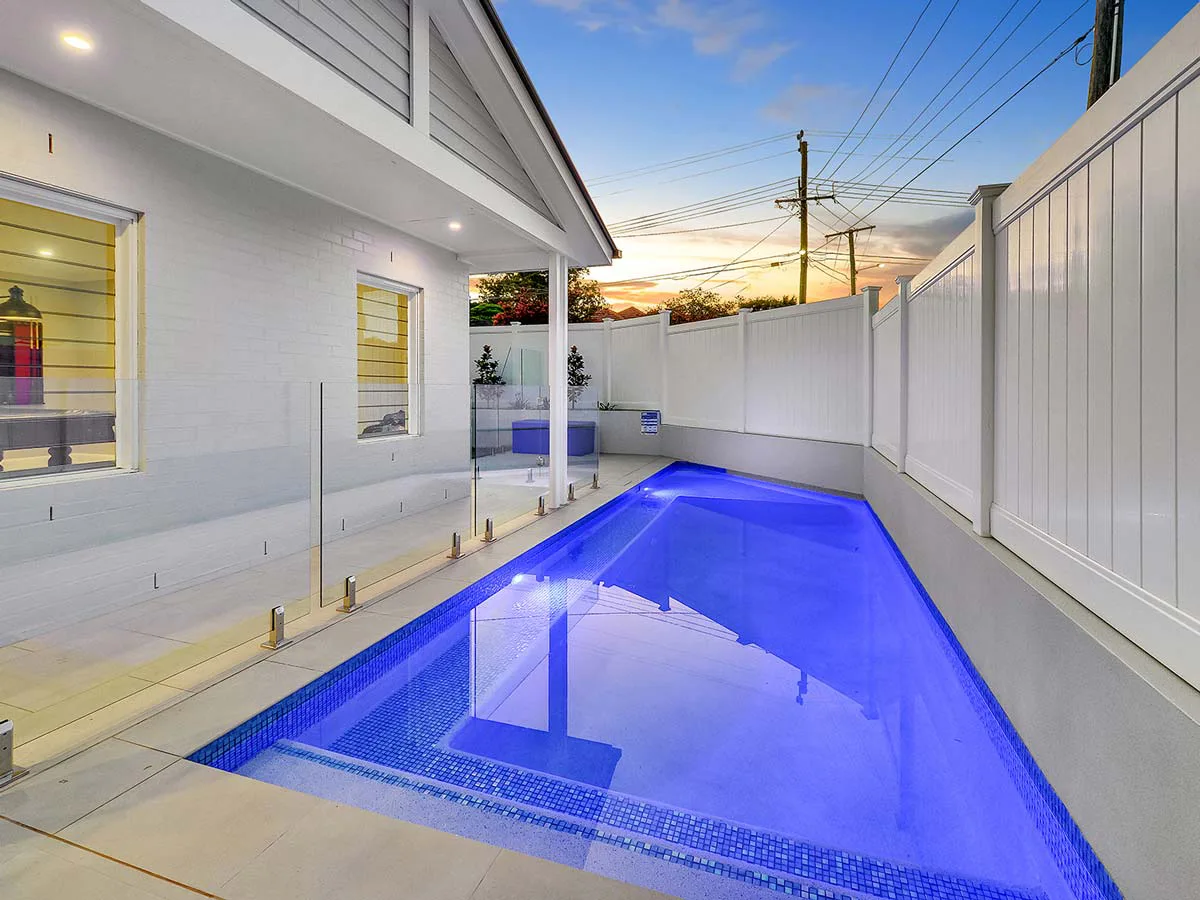
Modern glass pool fencing uses toughened safety glass manufactured to Australian standards, typically 10mm or 12mm thick. You can get frameless designs with spigot mounting, semi-frameless systems with minimal aluminium channels, or fully framed options with more structural support.
The advantages go beyond just being able to see through it. Glass doesn’t corrode in Brisbane’s humidity or from pool chemical exposure. It won’t splinter like timber or fade like some aluminium finishes. For infinity pools or contemporary luxury pools, glass fencing complements clean, modern architectural styles beautifully.
Maintenance is mostly about keeping it clean. Brisbane’s subtropical climate means water spots from sprinklers, salt residue if you’re near the coast, and general dust will accumulate. Regular cleaning with proper glass cleaners maintains clarity, though most homeowners find it less demanding than treating timber or touching up aluminium.
The downside? Cost. Quality frameless glass systems typically cost more than aluminium or timber alternatives. But the longevity, low maintenance, and property value boost often justify the investment, especially for luxury pool installations across Brisbane.
Aluminium Pool Fencing: The Practical Choice
Aluminium pool fencing offers durability and flexibility at a more accessible price point. Powder-coated aluminium resists rust brilliantly in Queensland’s humid environment, maintaining both structure and appearance despite constant exposure to pool chemicals, saltwater, and tropical weather.
Design options are extensive. You can get traditional vertical pickets, horizontal slat designs, decorative patterns with curves, or combination styles with mesh infill. Colour selections through powder-coating extend way beyond basic black or white, with manufacturers offering dozens of standard colours plus custom matching.
Brisbane pool construction projects often specify aluminium for its strength-to-weight ratio. It provides excellent structural integrity whilst staying lighter than steel, which simplifies installation on challenging terrain or properties with tricky access. The material won’t warp, crack, or rot regardless of Brisbane’s seasonal weather swings.
Installation flexibility is another win. Panels can be cut to accommodate slopes, retaining walls, or irregular boundaries. Core-drilled spigots allow mounting on existing concrete without ripping up paving, whilst flanged posts work for new installations. This versatility proves valuable for Brisbane properties with existing landscaping you want to keep.
The main limitation is visual density. Unlike glass panels, aluminium barriers obstruct views depending on picket spacing and design. For some homeowners, this privacy is actually an advantage. For others wanting to showcase their infinity pool or maintain open sightlines, glass might be the better call.
Timber Pool Fencing: Natural Warmth
Timber pool fencing brings organic warmth to Brisbane pool areas, offering traditional aesthetics that complement everything from classic Queenslanders to modern homes incorporating natural materials. The versatility lets you customise through species selection and finish choices.
Popular timber species include treated pine, which is affordable and accepts stains or paints readily, and hardwoods like merbau or spotted gum that provide superior durability and rich natural colour. Each species has different characteristics for weather resistance, maintenance needs, and longevity.
Design possibilities range from horizontal slats providing contemporary appeal to vertical pickets offering traditional charm. Timber accepts various finishes, from natural oils enhancing grain to solid colours matching home exteriors. This flexibility lets you create cohesive outdoor designs integrating pool fencing with decking, pergolas, and other timber landscape elements.
Brisbane’s subtropical environment demands realistic expectations about maintenance. Timber requires more attention than aluminium or glass. You’re looking at annual or bi-annual resealing, staining, or painting to maintain protection against moisture and UV. Without proper maintenance, timber can warp, crack, or develop rot, particularly in constantly damp conditions near pools.
When pool builders install timber pool fencing, construction technique matters enormously. Posts need adequate treatment and installation with moisture barriers. Rails and pickets require spacing that prevents water accumulation whilst maintaining compliant gaps. Hardware should be stainless steel or similarly corrosion-resistant materials that won’t stain timber or deteriorate.
Beyond the Fence: CPR Signs and Safety Zones
Queensland law requires more than just physical barriers. Every regulated pool must display a CPR (cardiopulmonary resuscitation) sign with clear instructions for emergency resuscitation. This recognises that despite prevention, emergencies can happen, and immediate CPR dramatically improves survival outcomes.
CPR signs must be visible and legible from anywhere in the pool area, typically mounted on pool fencing or adjacent structures rather than distant boundary fences. The sign needs to show current CPR protocols and be weatherproof. Many pool construction projects include compliant CPR signage as part of final installation.
The area around your pool fencing needs attention too. You’ve got to remove anything that could help kids climb over barriers. That includes outdoor furniture, plant pots, poolside storage, play equipment, or decorative features too close to fencing. Vegetation needs regular trimming to prevent branches from creating stepping points near fence tops.
Building access faces restrictions designed to prevent kids reaching pools through home entry points. Doors or windows providing direct access from buildings to pool areas need specific safety features. Options include ensuring these openings only exist in areas separated from the pool by compliant pool fencing, or installing approved door and window safety devices meeting Australian Standards.
Pool Safety Certificates: What You Need to Know
When selling or leasing a Brisbane property with a pool, you need a Pool Safety Certificate (Form 23) from a licensed pool safety inspector. These certificates verify your pool fencing and all safety features comply with current regulations. Certificates last two years for residential pools or one year for shared pools like units or townhouses.
Licensed inspectors conduct thorough assessments covering every compliance aspect. They examine fence height at multiple points, verify gap measurements throughout, test gate mechanisms, assess non-climbable zones, check CPR signage, and evaluate overall fence condition. Inspectors also look at surrounding elements that might compromise safety, like nearby climbable objects or vegetation.
When inspections find problems, you get a Form 26 instead of a certificate. This details specific issues requiring fixing before compliance can be certified. You typically have 90 days to address problems and arrange re-inspection.
You can find licensed pool safety inspectors through the QBCC website, which maintains a searchable database. Many pool builders work with preferred inspectors who understand their installation standards and can efficiently verify compliance for new projects.
The Cost of Non-Compliance
Queensland combines education with enforcement on pool fencing compliance. Local councils can conduct inspections, respond to complaints, and issue penalties for non-compliant pools discovered during checks.
Here’s the thing: compliance responsibility rests with you as the property owner, regardless of when your pool was installed or who did the work. Buying a property with an existing pool doesn’t exempt you from ensuring the fencing meets current standards. Pools installed before recent updates must be upgraded. There’s no ‘grandfather’ provision letting older installations maintain outdated configurations.
Some properties face genuine circumstances where standard requirements create hardship or physical impossibility. Queensland provides exemption pathways, primarily for disability access or physical impracticality. Applications go through local councils, requiring detailed justification and usually proposing alternative safety measures. These exemptions remain rare and narrowly granted.
Keeping Your Pool Fence Compliant
Pool fencing compliance isn’t one-and-done, it’s ongoing. Brisbane’s environmental conditions place continuous stress on fence materials and mechanisms. Proactive maintenance prevents compliance issues whilst extending your pool fencing investment’s life.
Gate mechanisms need particular attention. Test gates monthly by opening fully and releasing, verifying they close completely and latches engage without help. Heavy use, wind, and temperature swings can all affect performance, with issues often developing gradually.
Check hinges for wear, looseness, or corrosion. Soft-close hydraulic units need occasional adjustment as mechanisms age. Verify latches engage at proper heights and can’t be easily manipulated by young children. Any deteriorating hardware needs prompt replacement.
Do fence structure assessments seasonally, particularly after Brisbane’s storm season. Check for loose panels, damaged posts, cracked glass, corroded aluminium, or deteriorated timber. Verify fence heights remain adequate, as ground settling or erosion can effectively reduce heights below minimums. Ensure non-climbable zones haven’t been compromised by nearby objects or vegetation growth.
Glass pool fencing maintenance focuses on panel integrity and mounting security. Inspect glass for chips, cracks, or loose mounting. Clean regularly with appropriate products. Check spigot mountings for corrosion or looseness, particularly in coastal Brisbane areas where salt accelerates metal degradation.
Timber pool fencing demands more intensive maintenance. Annual treatment with appropriate sealants or stains protects against moisture damage and UV degradation. Address warping, cracking, or rot promptly, as deterioration progresses quickly in Brisbane’s humidity. Check that timber maintains required gap dimensions, as warping sometimes increases gaps beyond compliance or creates new climbable features.
Getting Your Pool Fencing Right
Pool fencing in Brisbane successfully combines mandatory safety compliance with design choices that enhance your outdoor environment. Understanding Queensland’s regulations provides the foundation for making informed decisions about materials, configurations, and features suiting your property and lifestyle.
Whether you choose glass, aluminium, or timber, quality pool fencing serves multiple purposes beyond legal compliance. It protects children, provides privacy, defines spaces, and contributes to property value. Brisbane’s competitive market means pools with properly designed, compliant pool fencing attract buyers and support premium valuations.
Planning new pool construction? Prioritise pool fencing discussions early in design processes. Contact Environ Pools to discuss how compliant, beautifully designed pool fencing can complete your pool project. Our design team brings award-winning expertise to creating Brisbane pool environments that combine safety, style, and functionality tailored to your property.
Disclaimer:
The information provided in this article is accurate at the time of publishing and is intended as a general guide for Brisbane pool owners regarding pool fencing compliance, safety requirements, and design options. Pool safety regulations and standards are subject to change, and interpretations may vary between local councils.
While we’ve taken care to ensure accuracy, this content should not be considered legal or professional advice. Pool owners are responsible for ensuring their pool fencing complies with current Queensland legislation and local council requirements. We strongly recommend:
- Consulting the Queensland Building and Construction Commission (QBCC) for the most current pool safety regulations
- Contacting your local council for specific requirements in your area
- Engaging a licensed pool safety inspector to assess your pool’s compliance
- Working with licensed and experienced pool builders for all pool fencing installations
Environ Pools accepts no liability for any reliance on the information contained in this article. For specific advice regarding your pool fencing requirements, please consult with qualified professionals.