Brisbane’s outdoor living culture is genuinely unlike anywhere else in Australia. With a subtropical climate that delivers warmth for most of the year, the distinction between indoors and outdoors becomes pleasantly blurred – and for homeowners investing in a pool, that blurring is worth planning for carefully.
The challenge is that outdoor living spaces, and swimming pools in particular, don’t exist in isolation. They sit within – and against – the architectural character of your home. Get the relationship right, and the result feels cohesive and considered. Get it wrong, and even the most expensive pool can look like it belongs to a different property entirely.
So which architectural styles actually suit Brisbane’s outdoor lifestyle? And more importantly, how do you make sure your pool design connects meaningfully with your home rather than competing with it?
Why Architecture and Pool Design Need to Speak the Same Language
Before covering specific styles, it’s worth understanding why this connection matters.
Concrete pools offer a significant advantage here over other pool types: they can be shaped, finished and detailed to match virtually any architectural language. A fibreglass pool comes in predetermined shapes and finishes. A custom concrete pool can be designed from scratch to complement the angles, materials and proportions of your specific home.
That flexibility is the reason most luxury pools in Brisbane are built in concrete. The design latitude is simply greater.
With that in mind, here are the architectural styles that generate the most successful outdoor living outcomes in Brisbane – and what each one demands from a pool and landscape perspective.
Contemporary and Modern Architecture
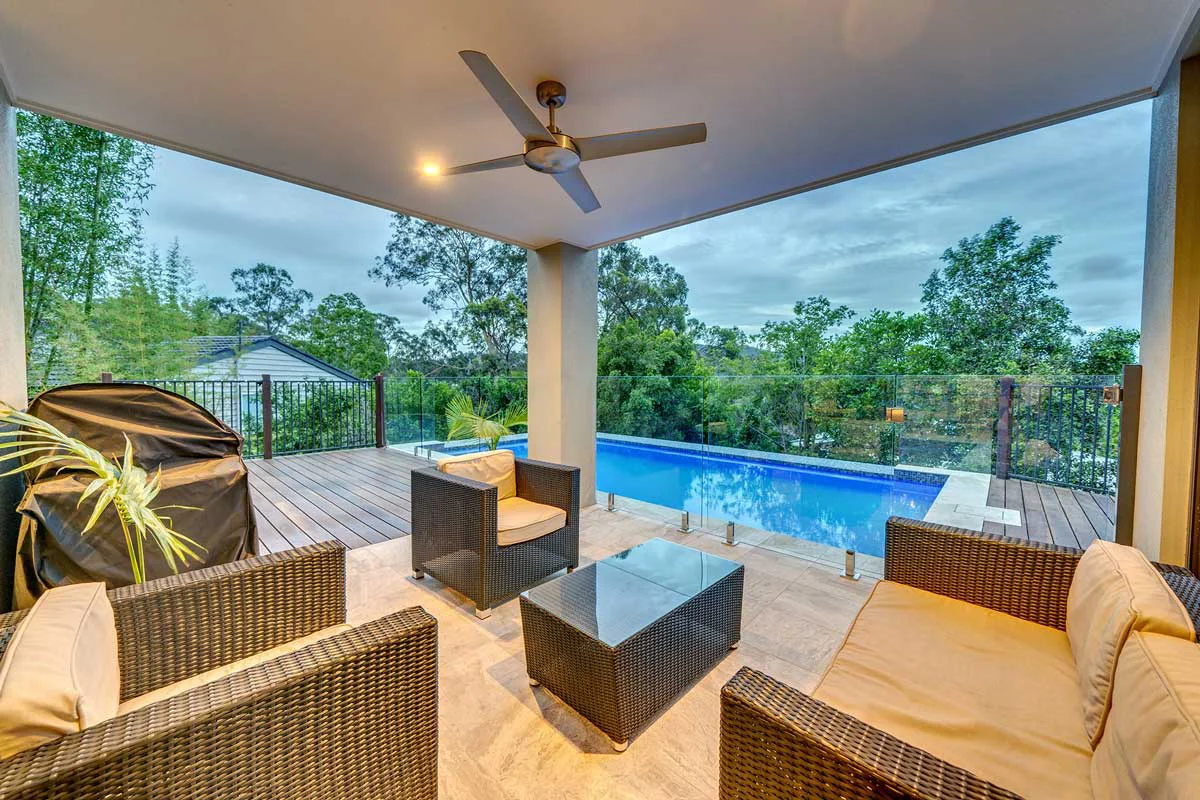
Contemporary homes are the most common canvas for high-end luxury pool projects in Brisbane right now. Clean lines, large glazed facades, horizontal emphasis and a restrained material palette – stone, concrete, timber and glass – characterise this style.
What works well here is directional alignment. Contemporary architecture responds to pools that share its geometry: rectangular or geometric forms, flush coping, dark or neutral finishes, and minimal ornamentation. The pool becomes an extension of the home’s compositional logic rather than a separate feature.
Infinity pools work particularly well with contemporary homes, especially where the site has elevation or outlook. The vanishing edge reinforces the visual extension of interior space outward – a defining goal of contemporary residential design. Pool lighting in this context tends toward subtle, integrated LED strip or recessed underwater fittings that maintain the clean aesthetic after dark.
Paving choices matter significantly. Large-format stone or pool tiles in a consistent tone – pale limestone, charcoal granite, or white concrete aggregate – maintain the visual calm these homes require.
Queenslander Architecture
The Queenslander is Brisbane’s defining residential form, and it presents a genuinely interesting design challenge for outdoor living spaces. High-set timber construction, wraparound verandahs, decorative fretwork, corrugated iron roofing and a clear vertical emphasis all create a character that sits in deliberate contrast to the geometric rigour of contemporary design.
The temptation with Queenslander renovations is to treat the pool as a separate contemporary addition and simply accept the contrast. That can work, but the more resolved approach is to find the points of connection between old and new.
Free form pools tend to sit more comfortably in Queenslander settings than rigidly geometric forms. Softer curves, pebblecrete or aggregate finishes, and natural stone paving create a more organic relationship with the home’s character. Tropical planting – palms, heliconias, ferns and broad-leafed canopy – reinforces this, building toward the resort-style outdoor setting that Queenslanders are well suited to.
Timber decking remains a natural choice for Queenslander properties, particularly hardwood or composite species that weather gracefully in Queensland conditions. The elevated structure of a Queenslander often creates useful under-house space that skilled pool builders can use creatively when working around site constraints.
Pool spa combinations work well here, particularly when the spa is positioned at a slightly higher level to reflect the tiered nature of the original architecture.

Hamptons and Coastal Style
The Hamptons aesthetic has had genuine staying power in Brisbane’s premium suburbs, particularly in the inner south, Moreton Bay fringes and coastal corridors. It’s characterised by light, airy interiors, shiplap or rendered white external finishes, black window framing, shutters and a relaxed, resort-influenced landscape palette.
The good news for pool design is that Hamptons-style homes are built to connect with outdoor living. Wide covered alfresco areas, louvred screens and bi-fold openings to outdoor entertaining spaces are standard features – and the pool is typically central to that vision.
What suits this architectural language: rectangular or simple geometric pool forms, white or pale interior finishes, sheer descent water features, and classic coping profiles in sandstone or rendered concrete. Pool fencing in frameless glass or black-framed semi-frameless glass is almost always the right choice – it preserves the visual connection to the pool without introducing materials that conflict with the home’s palette.
Family pools work particularly well in Hamptons settings because the style inherently suggests relaxed, generous entertaining – wide tanning ledges, shallow entry areas and integrated seating zones all sit naturally within this aesthetic. Sun shelves and baja ledges are common inclusions.
Mid-Century Modern
There’s a strong cohort of mid-century modern homes throughout Brisbane’s inner suburbs – particularly in areas like Bardon, Indooroopilly, Fig Tree Pocket and Chapel Hill – and they’re increasingly attracting owners who want to renovate thoughtfully rather than demolish.
Mid-century architecture is characterised by low-pitched rooflines, strong connection to the landscape, natural materials (particularly timber and stone), and a design philosophy that integrates inside and outside as a deliberate intention rather than an afterthought.
Pools that work here tend to respect the horizontality of the architecture: long, low forms – often lap pools or elongated rectangular designs – that emphasise the connection to the site. Exposed aggregate finishes, natural stone coping and timber decking all read sympathetically with mid-century character.
Infinity pools can be particularly striking in mid-century settings where the home is positioned on a ridge or elevated site – the vanishing edge reinforces the seamless landscape connection that mid-century architects were working toward. This style also responds well to considered pool lighting that extends the livability of the outdoor space into the evening, which aligns with the indoor-outdoor philosophy at the core of mid-century design.

Industrial and Warehouse-Influenced Design
A smaller but growing category in Brisbane’s residential market – particularly in inner-north suburbs like Newstead, Teneriffe and New Farm – is industrial and warehouse-influenced architecture. Exposed concrete, steel framing, oversized glazing, mezzanine levels and an unapologetically raw material palette define this style.
Outdoor living in these settings tends toward the dramatic. The pool design choices that work best here are bold and minimal simultaneously: dark-finish concrete pools with black pool tile interiors, geometric precision in form, polished concrete or bluestone paving, and frameless glass pool fencing that maintains sight lines without softening the industrial edge.
Water features in this context tend toward architectural rather than naturalistic expressions – blade falls, slot overflows and sheer descent features all sit well. The overall effect is resolved and intentional: a space that looks designed rather than assembled.
Tropical and Resort-Influenced Design
Brisbane’s climate positions it well for genuinely resort-influenced outdoor living, and a growing number of homes in areas like Pullenvale, Brookfield and the Samford Valley are being designed explicitly in this language. High ceilings, open pavilion structures, broad roof overhangs, cross-ventilation as a core design strategy, and tropical planting as a structural element of the landscape.
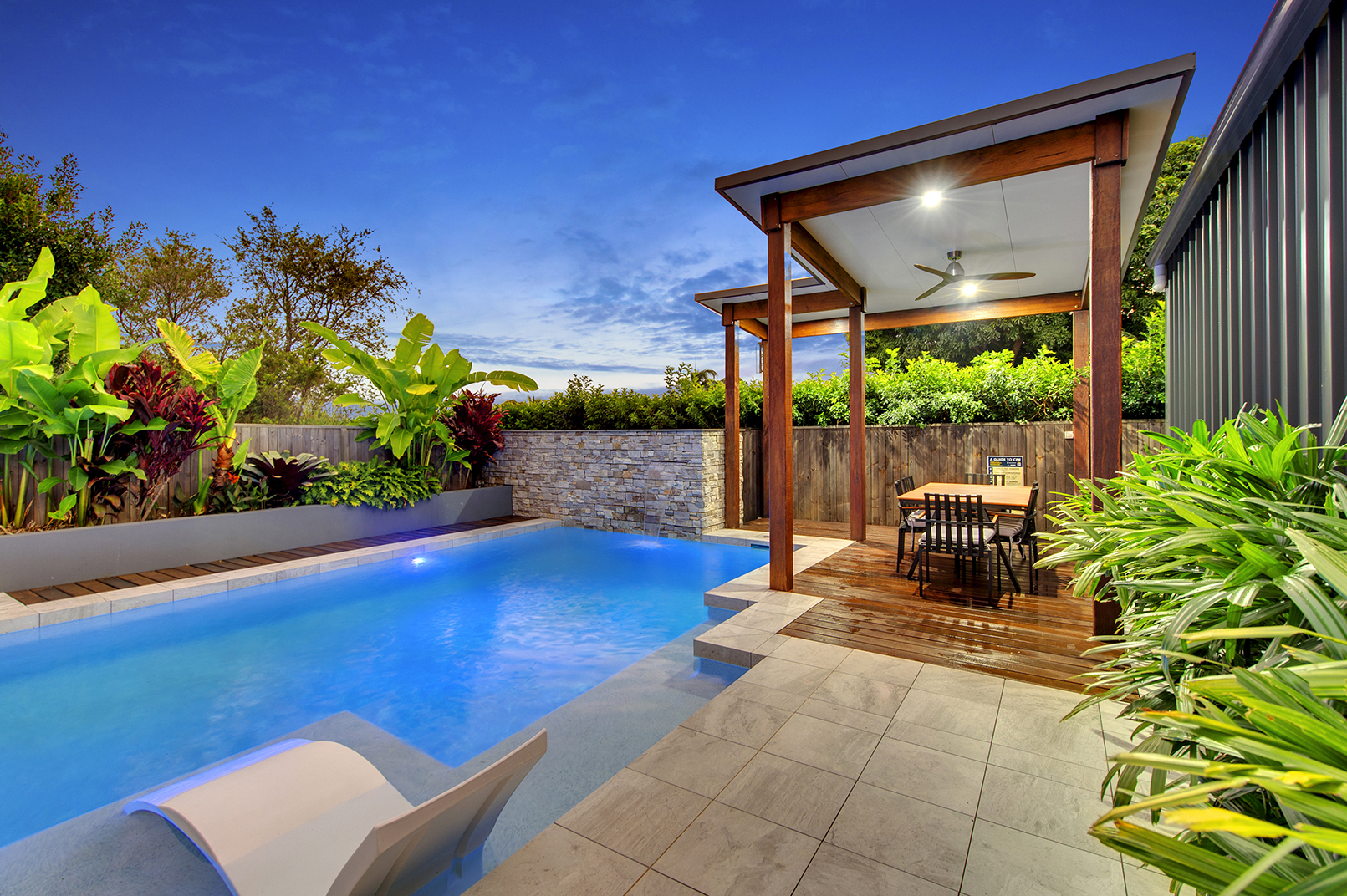
This is perhaps the most forgiving architectural language for pool design because the resort aesthetic embraces variety. Free form pools with beach entries and planted surrounds, rectangular pools with floating day beds and fire features, or elevated infinity pools with panoramic outlooks – all of these read naturally within a tropical residential setting.
Pool spa combinations are almost standard in the resort category. The spa provides year-round usability – particularly valuable in Brisbane’s cooler months – and creates the layered, experiential quality that distinguishes resort design from a standard backyard pool.
Pebblecrete and natural aggregate finishes work beautifully here, as do pool tiles in earthy tones, mosaic patterns and iridescent finishes that catch the subtropical light. Integrated pool lighting – particularly colour-changing LED systems – extends the entertainment value of the space well into the evening.
The Right Pool for Your Home’s Architecture
Every architectural style has a pool design language that suits it – and the most successful outdoor living spaces in Brisbane are those where the two have been considered together from the outset. Whether you’re working with a heritage Queenslander, a contemporary inner-city rebuild or a resort-influenced acreage property, the design process should start with your home’s character and work outward.
The design team at Environ Pools has spent close to three decades working across Brisbane’s diverse architectural landscape. From award-winning luxury pools in prestige suburbs to family pools designed to work beautifully with period homes, the approach is always the same: understand the architectural context first, then design a pool that genuinely belongs there.
If you’re planning a pool and want to make sure the design is right for your home, contact us to start a conversation. You can also read about our design process and what to expect from the journey from brief to handover.