
Water therapy and stress reduction have a relationship that goes far deeper than a relaxing afternoon swim. Researchers have spent decades studying how water affects the human nervous system, and the findings are compelling – particularly for Australians living in the heat and pace of Brisbane’s subtropical lifestyle.
This isn’t about wellness trends or marketing language. The physiological effects of water immersion, the psychological impact of blue space, and the measurable changes in cortisol and heart rate variability are well documented. Understanding the science gives you a far better framework for making decisions about your home environment and how you recover from the demands of daily life.

What Happens to Your Body When You Enter Water
The moment you immerse yourself in water, your body responds with a cascade of physiological changes. Blood pressure typically drops within minutes. Heart rate slows. The mammalian dive reflex – an evolutionary response humans share with other mammals – activates and begins to calm the autonomic nervous system.
Hydrostatic pressure, the gentle force exerted by water on the body, reduces swelling in peripheral tissues and encourages blood to redistribute toward the core and vital organs. This is one reason hydrotherapy has been used clinically for decades in rehabilitation settings. The same mechanism that helps a post-surgical patient recover also makes an evening swim feel deeply restorative after a stressful day at work.
Thermal regulation plays an equally important role. Warm water immersion activates the parasympathetic nervous system – the “rest and digest” counterpart to the stress response – and has been shown to increase production of serotonin and reduce circulating cortisol levels. Cool water, by contrast, triggers a brief sympathetic response followed by a pronounced rebound effect, which is why cold-water exposure has attracted significant attention in recovery science.
The Neuroscience of Blue Space
“Blue space” is the term researchers use to describe environments involving water – oceans, rivers, lakes, and yes, residential pools. The body of evidence around blue space and psychological wellbeing has grown substantially over the past decade, drawing from studies across the UK, Australia, Europe and the United States.
A landmark study published in the journal Health and Place found that proximity to blue space was associated with significantly lower rates of psychological distress, even after controlling for socioeconomic factors. Researchers at the European Centre for Environment and Human Health (ECEHH) have published extensively on the restorative effects of water environments, identifying measurable reductions in anxiety and improvements in mood following time spent near or in water.
The proposed mechanisms are several. Visual processing of water – particularly flowing or reflective surfaces – appears to engage the brain’s default mode network in a way that encourages cognitive defocusing, a state associated with creative thinking and emotional recovery. The rhythmic sounds of water have been shown to reduce amygdala activation, the brain region most associated with threat processing and anxiety. In short, water gives your brain something to settle into rather than something to react to.
For Brisbane homeowners, this has practical implications. Queensland’s climate makes outdoor water access genuinely viable year-round, which means the therapeutic benefit isn’t seasonal – it’s a resource you can draw on consistently, 12 months of the year.
Cortisol, Sleep and the Recovery Cycle
Chronic stress elevates cortisol – the body’s primary stress hormone – and sustained high cortisol is associated with disrupted sleep, reduced immune function, weight gain around the abdomen and impaired memory consolidation. The challenge for most people isn’t identifying the problem; it’s finding reliable, non-pharmacological tools to interrupt the cycle.
Water therapy sits at an interesting intersection here. Research from the University of Osaka found that regular evening warm-water immersion improved both sleep onset latency (how quickly people fell asleep) and sleep quality scores. The mechanism is well understood: immersion raises core body temperature, and the subsequent drop in core temperature as you exit the water signals to the brain that it’s time to sleep – mimicking the natural cooling that occurs at the onset of darkness.
A pool spa combination or dedicated spa environment at home makes this kind of consistent evening routine genuinely accessible. The barrier to entry is simply stepping into your own backyard rather than driving to a facility, booking a time slot, or navigating a public environment. That accessibility isn’t trivial – consistency is what produces the physiological benefit.
Aquatic Exercise and the Stress Response
Active water exercise produces stress reduction through a different but complementary set of mechanisms. Swimming, aqua jogging and resistance work in water all trigger endorphin release – the same neurochemical cascade associated with improved mood following land-based exercise – but with substantially lower joint loading and less systemic inflammatory response.
Lap pools are particularly well suited to this application. The repetitive, bilateral nature of swimming – alternating arm strokes, rhythmic breathing, continuous proprioceptive feedback – produces a meditative state that researchers sometimes describe as “moving meditation.” Elite athletes have reported this for decades; the neuroscience now supports the observation. Bilateral rhythmic movement activates both hemispheres of the brain alternately, a pattern associated with reduced emotional reactivity and improved emotional processing.
For Brisbane families navigating the demands of work, school-age children and a city that’s grown increasingly busy, a dedicated lap pool at home removes the friction between intention and action. You don’t need to be training for a competition to benefit. Twenty minutes of continuous lap swimming produces measurable changes in cortisol and subjective stress ratings.

Why Brisbane’s Climate Is an Advantage
One variable that rarely appears in Northern Hemisphere water therapy research is consistent year-round outdoor temperature – and for Brisbane homeowners, this is genuinely significant. The research on water therapy and stress reduction consistently identifies frequency and consistency as key determinants of outcome. Monthly immersion produces far less benefit than weekly or daily access.
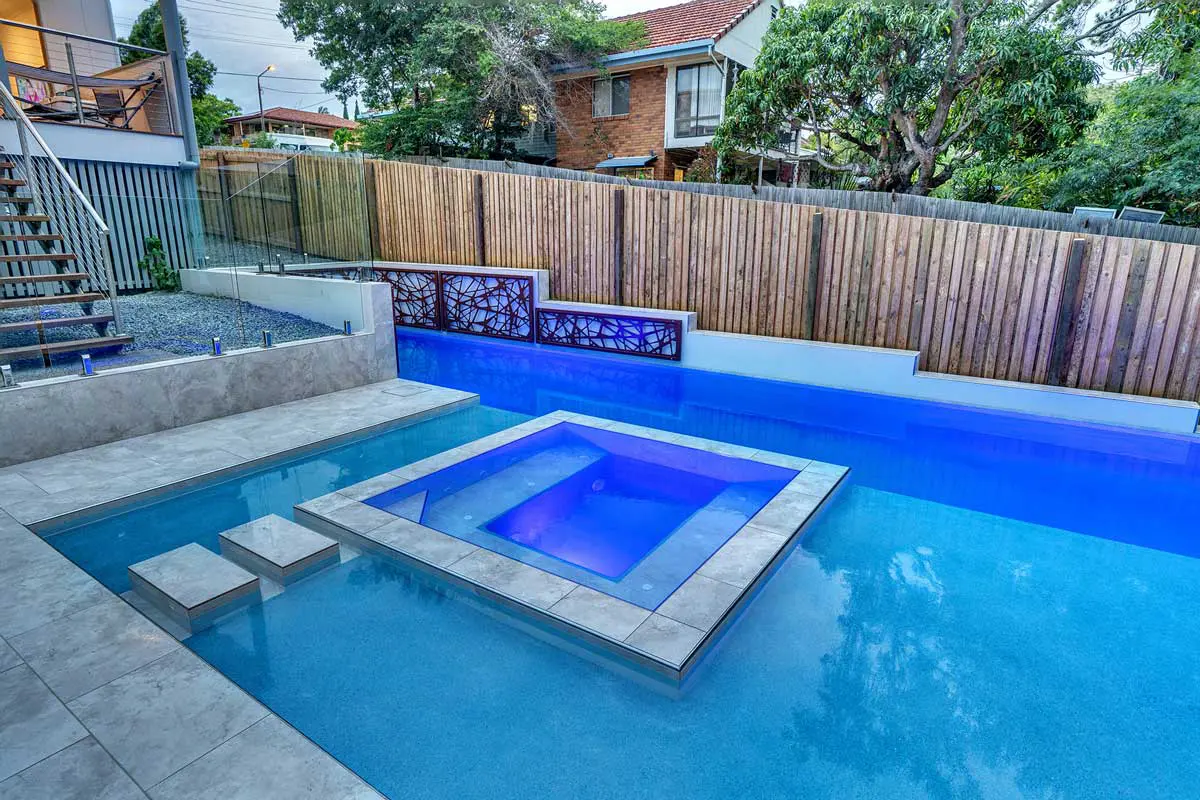
In a city where outdoor pool use is viable across all four seasons – where even a July evening is warm enough for a comfortable swim – the conditions for consistent therapeutic water access are exceptionally favourable. Concrete pools Brisbane homeowners install are designed to function year-round, not as summer-only assets. Paired with an efficient heating system, a well-designed luxury pool in Brisbane becomes as functional in winter as a warm bath – with considerably more space to move through.
Queensland’s pool safety requirements also mean residential pools are built to a standard that supports regular, safe use by all household members, including children – which matters when you’re thinking about water therapy as a family resource rather than a solo retreat.
The Case for Home Water Access
The evidence for water therapy and stress reduction is strong, consistent across research traditions, and practically relevant to how people live in Brisbane. The challenge has always been access – most people can’t get to a clinical hydrotherapy facility regularly, and public aquatic centres, while valuable, require scheduling and commuting that erodes the benefit.
A home swimming pool in Brisbane – particularly one designed with the therapeutic dimension in mind – solves that access problem entirely. The investment isn’t just in a recreational amenity or a property feature. It’s in a daily resource for physiological recovery, sleep quality, stress management and family wellbeing.
If you’re considering a pool build and want to understand what’s possible with your site and budget, the Environ Pools design team works through a detailed design process that takes your lifestyle goals – not just aesthetics – into account from the beginning.
Contact us to start the conversation, or explore our pool portfolio to see how Brisbane homeowners are already using custom-designed aquatic spaces to support how they live and recover.